

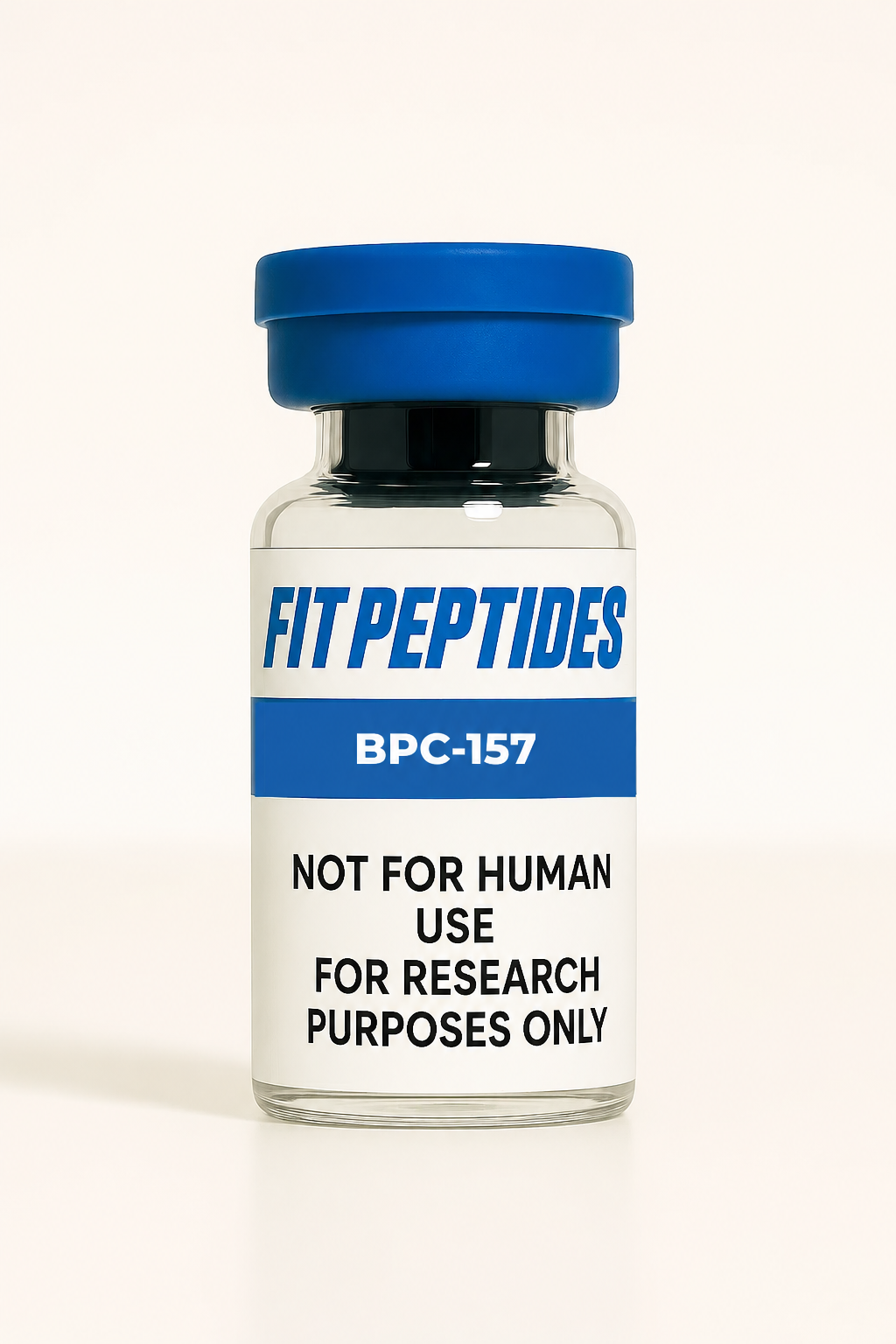
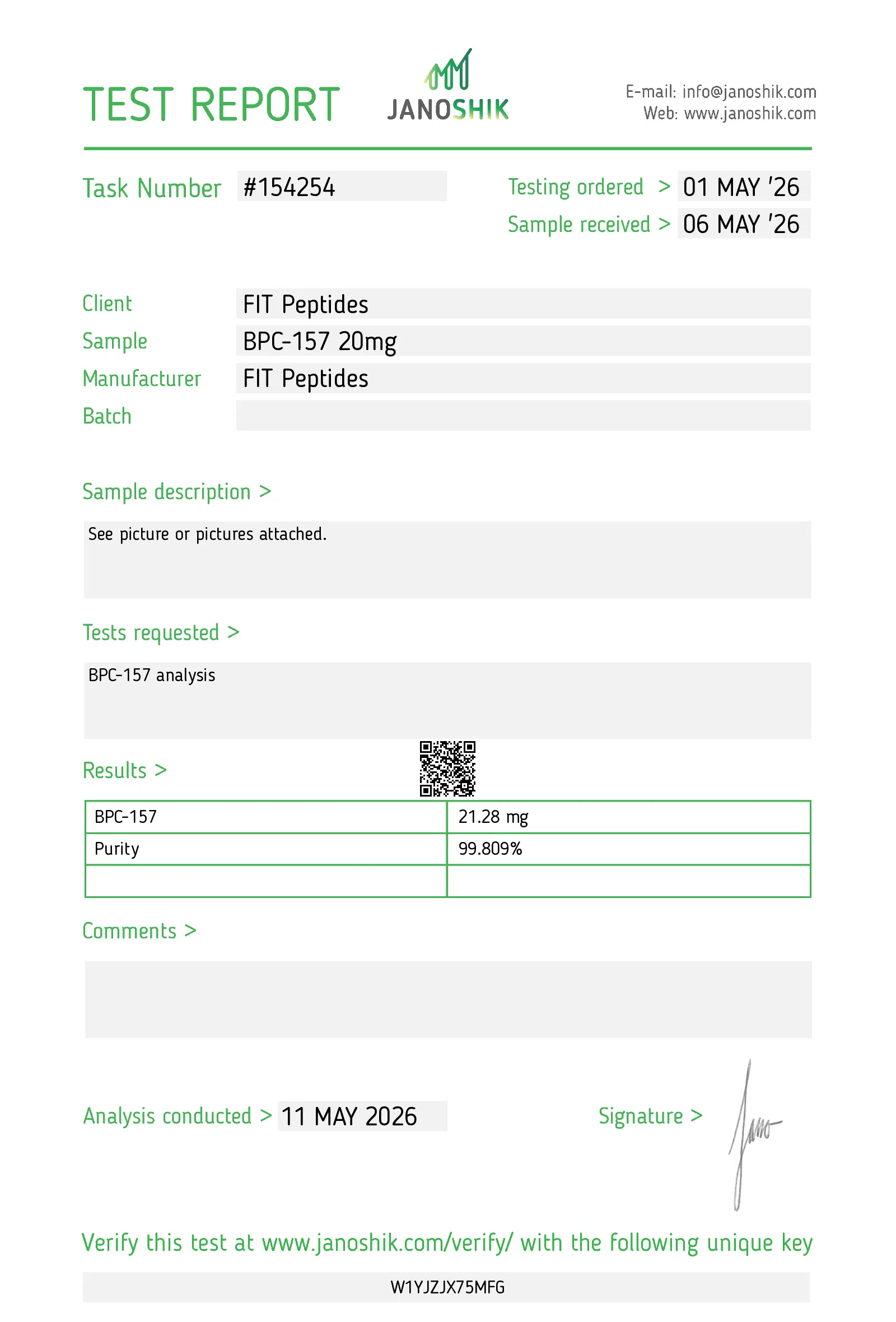
BPC-157 Peptide
BPC-157 is a synthetic research peptide used in a scientific context to study fundamental biological processes. In research, this peptide is known for its potential involvement in tissue and repair processes, cell migration, and the regulation of biochemical signals. BPC-157 is not approved by regulatory authorities and is intended solely for research purposes.
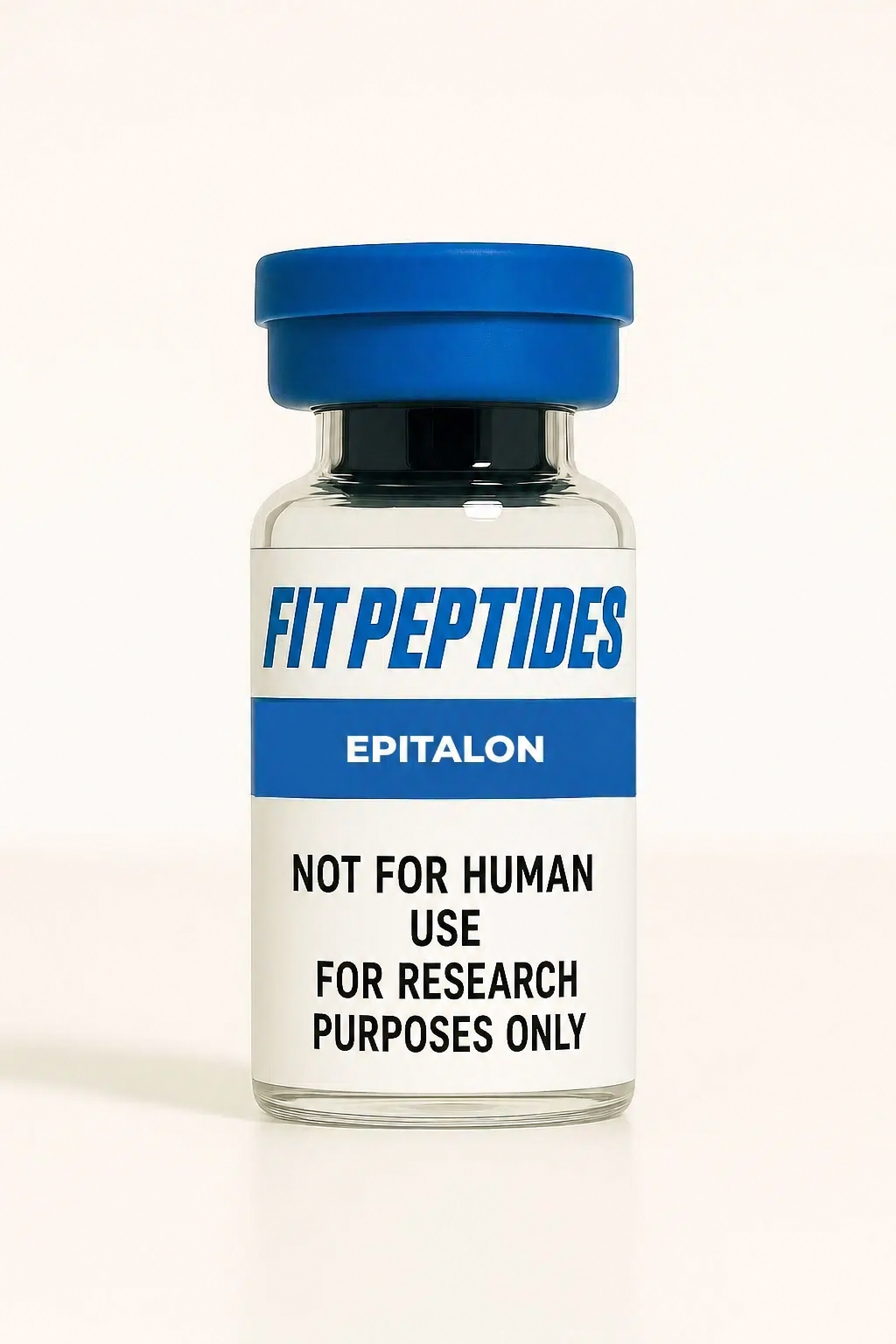
This vial of FIT PEPTIDES BPC-157 is part of the range of high-quality research peptides within the repair and regeneration category . The product has been developed for professional use in laboratories and R&D environments, such as in vitro experiments, analytical applications, and method development.
Scientific background
BPC-157 is derived from a portion of the endogenous peptide gastric juice protein BPC and is used in research to analyze biochemical signaling pathways associated with tissue communication and repair processes. Publications describe, among other things, interactions with cellular networks, angiogenesis, and modulation of local microenvironments in experimental models.
Due to these properties, BPC-157 is regularly investigated in combination with other peptides such as TB-500 in compound research setups, for example the Wolverine Blend (BPC-157 & TB-500) .
Possible research areas and effects
In controlled study designs, BPC-157 is studied within various experimental contexts. Important research areas are:
- Tissue repair and regeneration – experimental models aimed at soft tissue repair after damage.
- Cell migration – study of the movement of cells within experimental environments.
- Angiogenesis – research into the formation of new blood vessels within predetermined models.
- Biochemical signal modulation – analysis of effects of BPC-157 on local cellular and molecular signals.
These research areas are based on scientific literature and preclinical data and serve solely as a context for research within controlled environments.
Safety and research context
BPC-157 falls outside regulated pharmaceutical applications and is not intended for clinical or veterinary use. The product is intended exclusively for professional research within laboratories and R&D environments.
- For research purposes only
- Suitable for in vitro research and analytical testing
- Use according to internal laboratory protocols
- Keep out of reach of unauthorized persons
Researchers working with repair and regeneration models often choose BPC-157 due to its broad applicability in experimental peptide studies and the possibilities for combination with other investigational agents.
Summary
FIT PEPTIDES BPC-157 is a research-grade peptide developed for professional laboratory research into cellular and tissue-related processes. This product fits within the broad FIT Peptides range and is ideal for researchers who value consistency, quality, and documentation within controlled experimental settings.
Frequently asked questions about BPC-157
What is BPC-157?
BPC-157 is a synthetic peptide that is used as a research substance in scientific studies into cellular processes and tissue communication.
What is BPC-157 being investigated for?
The peptide is being investigated in relation to tissue repair, cell migration, angiogenesis, and biochemical signal modulation in preclinical and in vitro models.
Is BPC-157 approved?
No, BPC-157 is not approved by medicines authorities and is intended solely for research purposes.
How does BPC-157 differ from TB-500?
BPC-157 is being investigated for its specific interactions with biochemical signals and repair processes, while TB-500 is primarily studied for cell migration and regenerative mechanisms.
Can BPC-157 be combined with other peptides?
In research, BPC-157 is sometimes combined with other peptides such as TB-500 in composite research designs such as the Wolverine Blend.
Where does BPC-157 fit within the FIT Peptides range?
BPC-157 falls within the repair and regeneration category and forms a core component within peptide research focused on tissue and cellular processes.

Reviews
There are no reviews yet.